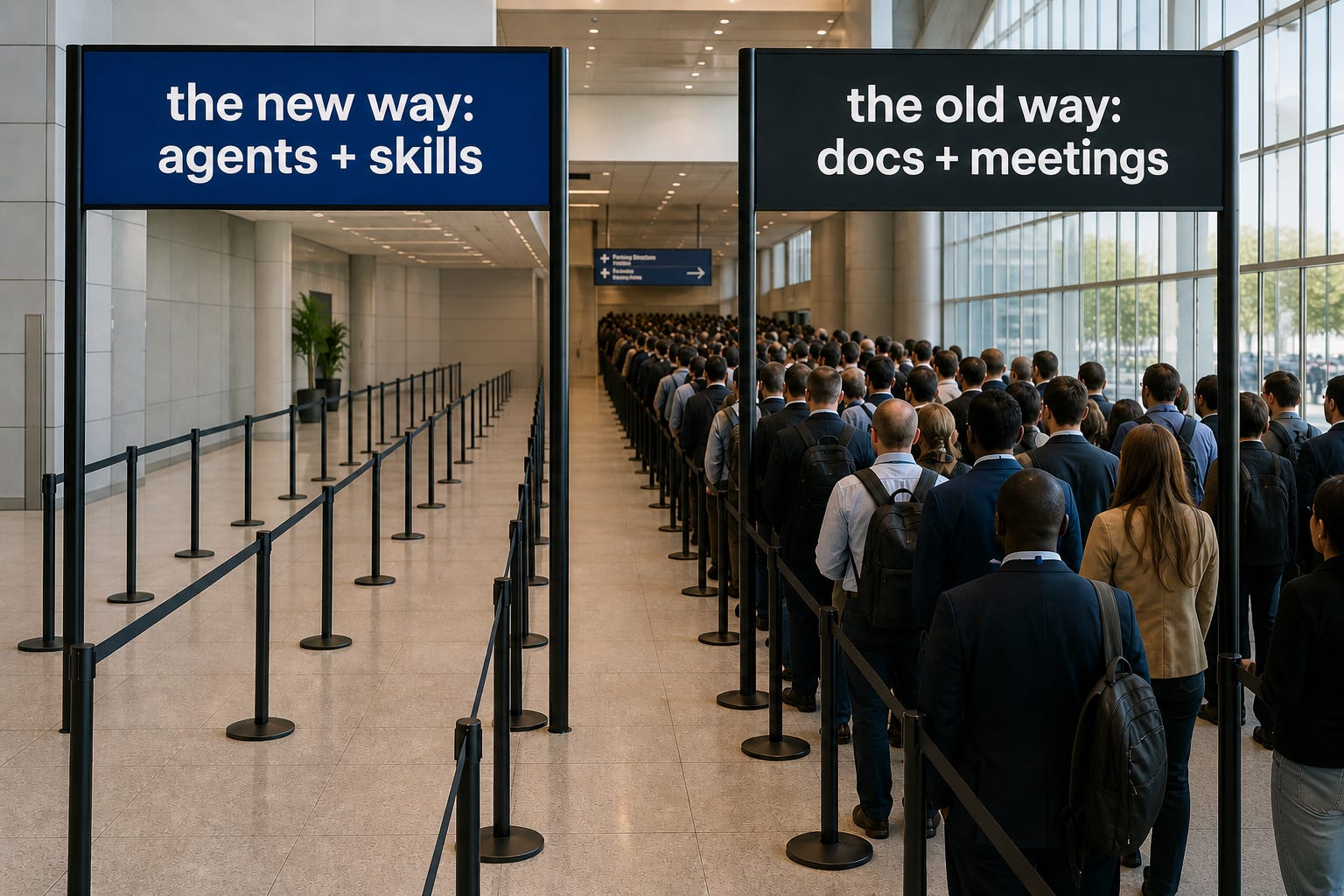
Unblocked

Most people in tech are aware of Elon’s infamous operating principle of focusing entirely on fixing the most important problem in the company, until it’s solved.
One way I am thinking about the holy trinity that is [agent harness + skills + models] is that it becomes a framework for codifying and actually implementing this ethos.
What consumes time and energy every day and every week?
What problems are blocking growth and success?
Every process, every bottleneck, every strategic pain point should be fodder for your agents, or at least your humans + their agents. Through this lens, everything becomes a “skill issue”.
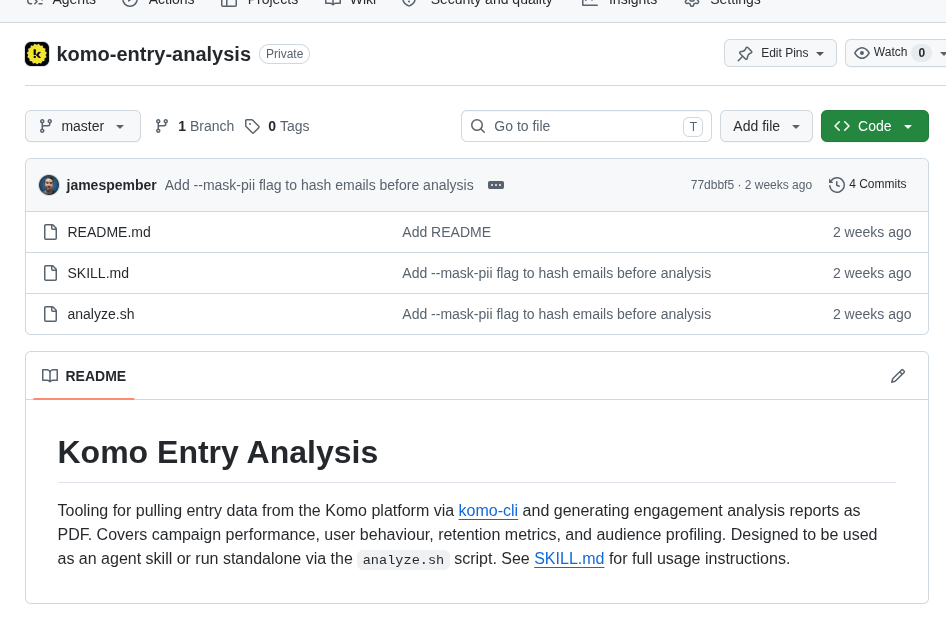
Let’s use an example. At Komo, one of the most time-consuming things we do is help customers build custom reports based on their data. Very stock standard SaaS customer success stuff.
Historically, this has been actually quite hard and time-consuming.
Export all the data —> sometimes needing a dev to help with a custom export from the database if the product doesn’t support it —> get it into a spreadsheet —> look for some trends and interesting takeaways —> get that into a deck —> try make it look nice …..
But with the power that is models + agents + skills, this becomes quite easy! You just tell the agent what to do, write a reusable manual (SKILL.md) and then all the user has to do is say, “hey agent, for Customer X, use your entry-analysis skill to pull the data, analyse the data and generate the report using the standard template”.
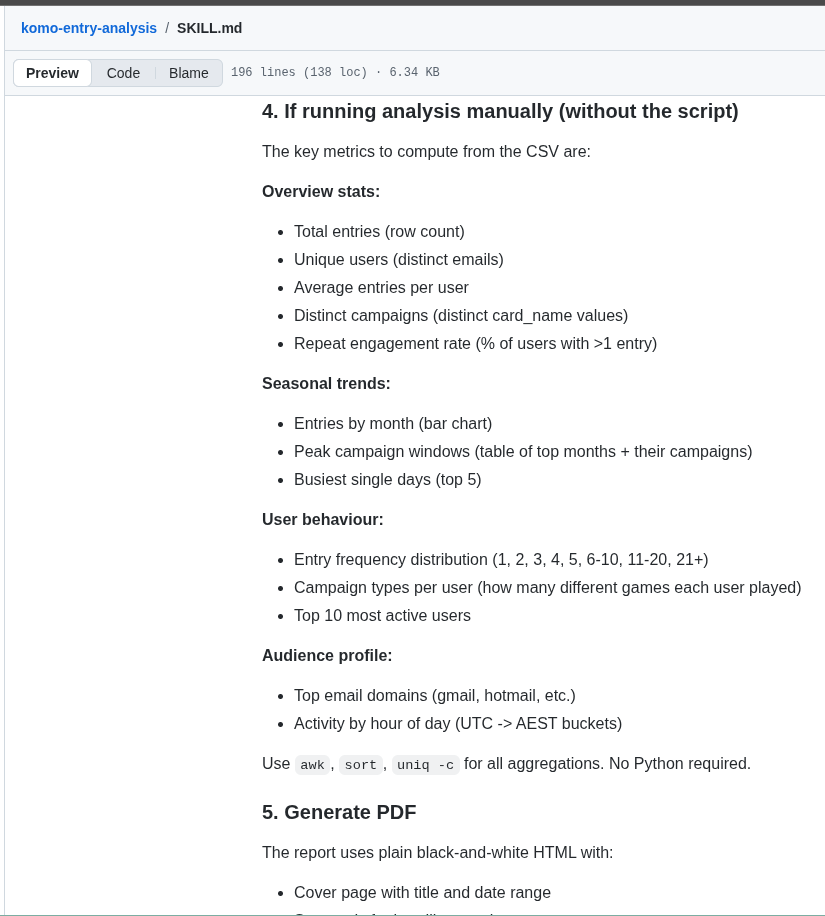
The skill is the unlock here. This is the process documentation that is so often skipped internally, as keeping it up to date manually over time is just too painful. You can also explain tasks in plain English (i.e. “calculate repeat engagement rate”), and the agent will figure out how to write the code to do it.
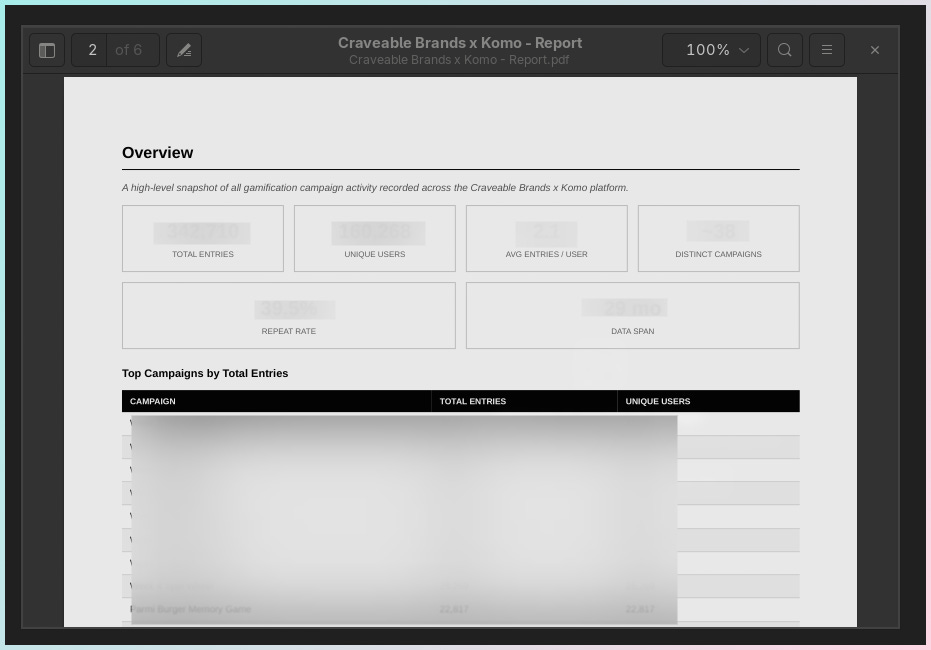
What used to take days now takes minutes. A previously-nightmarish business process is now easy to execute over-and-over again. Importantly, you can iterate on the process and have it self-improve.
Right now, whenever I run into recurring tasks, blockers or problems, I try and ask myself: is this just a skill issue? Could some custom code and a set of instructions solve for this?
All of this said, there are still tremendous UX problems to solve here. Orchestration, guardrails, tool definition, scheduling/invocation etc. Using agents and skills is still a fairly big technical leap for a lot of business users. Many are trying to solve this problem (see: Claude Cowork etc), and I think we will ultimately triangulate on some very good UX patterns, but we aren’t there quite yet.