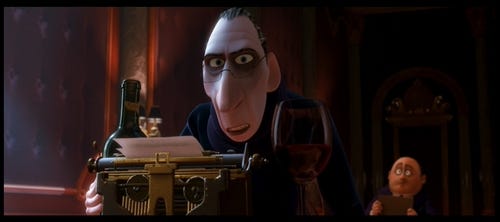
“In many ways, the work of a critic is easy. We risk very little, yet enjoy a position of those who offer up their work and their selves to our judgement. We thrive on negative criticism. Which is fun to write and to read. But the bitter truth we critics must face, is that in the grand scheme of things, the average piece of junk, is probably more meaningful than our criticism designating it so. But there are times when a critic truly risks something, and that is in the discovery and defense of the new. The world is often unkind to new talent, new creations. The new needs friends.” - Anton Ego (Ratatouille).
I remember sitting with some friends at a restaurant many years ago, with food that was objectively terrible. Everyone around the table took great pleasure in mocking it, and I can remember breaking out in a frustrated tone, “can’t we just enjoy the lunch, why do we have to be so negative?”. In retrospect, this is an embarrassing memory for me. It’s very to me clear I overreacted. They weren’t really being negative, they were simply finding the comedy in just how bad the food was. We to this day laugh about this lunch now (“can you believe how bad it was”), but this scene has never left me, and I’m not entirely sure why.
I have vivid memories from my late teens, finding it so odd that some people would revel in shitting on others behind their backs. I of course couldn’t describe why it made me unreasonably uncomfortable back then, but now I’ve understood that my personality biases to earnestness. I just prefer to be nice and think the best in people, for better or worse (and sometimes it really is worse). Suffice to say, I suck at banter.
We rarely admit it, but a lot of people find negativity really fun. I witnessed back then how certain people got themselves into bad habits with cynicism and snark. A cycle and a dangerous loop. If I think back now, for many of these types, after so much snark, pivoting to kindness must’ve felt so jarring, so much so that it just didn’t ever happen. Taking things seriously is a muscle that needs training like any other.
“As I got older it became clearer to me that not many people are really serious about anything. Some people go their whole lives without ever having met anyone else who I might describe as actually serious, so they find it hard to believe that anybody could really mean what they say, since everything everyone says is bullshit.” - visakan veerasamy
Later in life, I witnessed similar patterns at work and in the industry discourse at large. How some seem to cherish any opportunity to tear something, or someone down. Through every wave from AI, crypto, VR to the “there’s an app for that”-era.
What role does the critic play? What functional benefits are there to criticism?
I’m not saying criticism is useless. It has a regulating function in the same way brakes have in a car. But nobody buys a car for the brakes. Being a critic is just so incredibly paternalistic. “I know better, and I’m here to shield you from all the terrible things in the world”. That must be an incredibly weird way to live.
Beyond that, it’s worth thinking about this idea of what each of the cynic and the optimist bring to the table. I’m reminded of that line from Ratatouille again, “the bitter truth we critics must face, is that in the grand scheme of things, the average piece of junk, is probably more meaningful than our criticism designating it so.”
Criticism has no inherent value, but every “thing” has inherent value. It may have low value or be something unpopular, but it is still something. Every app, every TV show, every restaurant, they are things that people have willed into the world.
It’s better to make things, no matter how “good” they are, than to not make things at all.