Moving up the stack
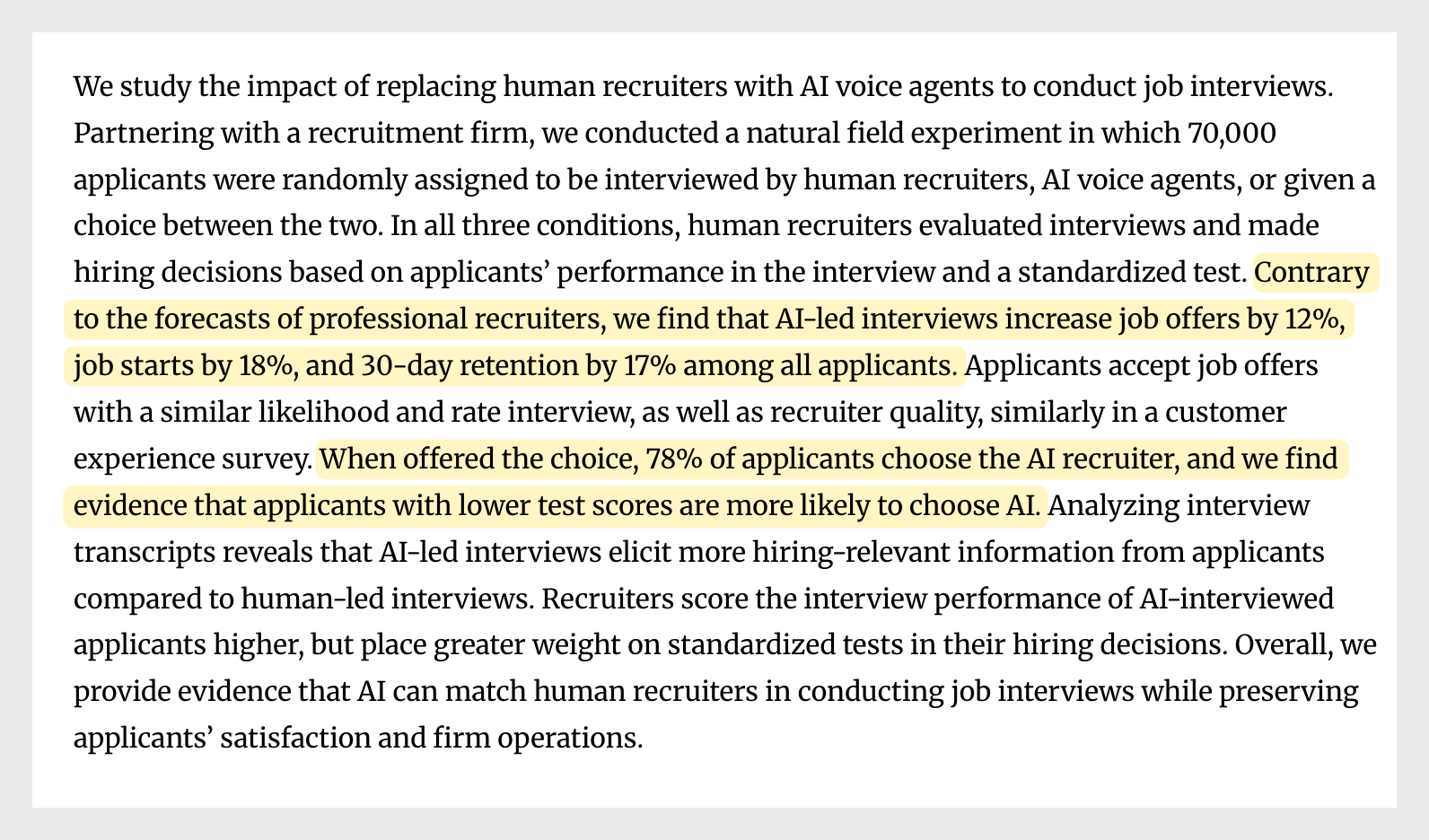
A real-world experiment with over 70,000 applicants, using AI voice agents instead of human recruiters led to more job offers, higher job start rates, and better retention. What does this mean?

I am an average “recruiter” and interviewer. Always have been. I tend to lose track of the specific questions I wanted to ask, get caught up in tangents and rabbits holes and often times emotionally over-invest in the discussion if I like someone, rather than stay neutral and objective.
So, when I saw a new study recently, suggesting basically that, AI recruiters seem actually pretty good, I frankly wasn’t that surprised. Here’s a link to the study.
The TLDR:
Study on 70k real-world applicants for entry level jobs in Philippines
Candidates were given the choice of interacting with a human or AI recruiter
AI “outperformed” humans on a few key metrics (job offers, job starts, retention)
Researchers say AI was more thorough and consistent than the humans
What’s interesting to me about this study is, it was using real candidates, and real job opportunities. The data around job offers, starts and retention, are real. So much of the AI discourse is theoretical. What could happen, what may happen. When we start to see real data, things start to get interesting, and I guess the implications start to require a lot of thought and discussion.
I guess this is just very real evidence that, AI is just going to continuously get better and better at tasks: structured, repetitive, well-defined work.
“Talk to this person, follow these guidelines, hear them out, ask them this list of questions and score them according to this evaluation framework” is a well-defined task, after all.
What does this mean?
I think it means quite a lot. Despite an industry-wide sense that we may be heading into a trough of disillusionment with AI, we should not be naive to the fact that the technology will continue to improve, even if slower than we’d like or expect.
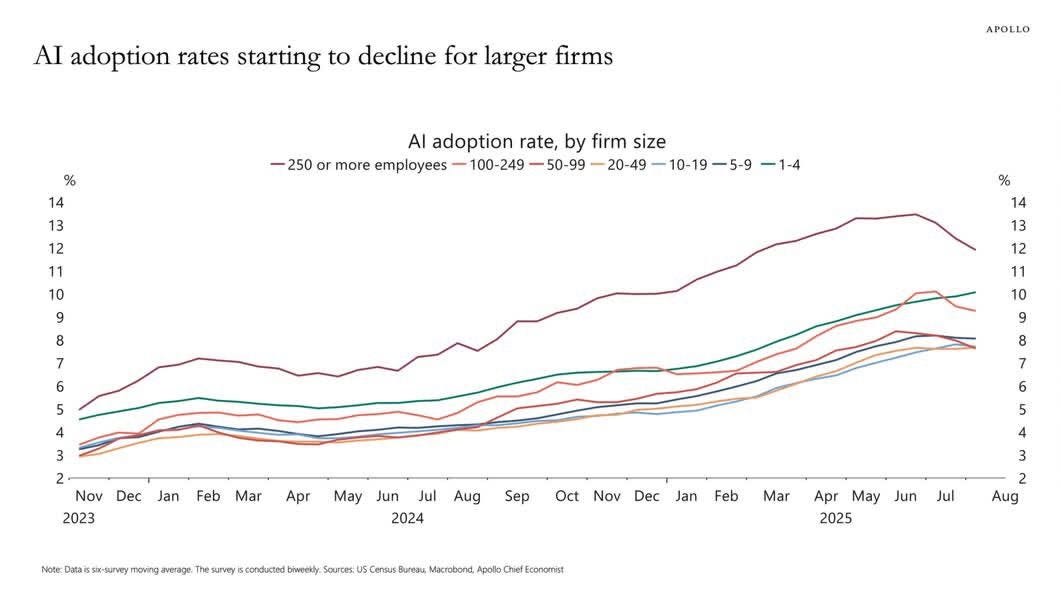
The data is disputed and it’s unclear whether it’s even to do with AI or not, but there are some signs that hiring may be slowing for younger staff.
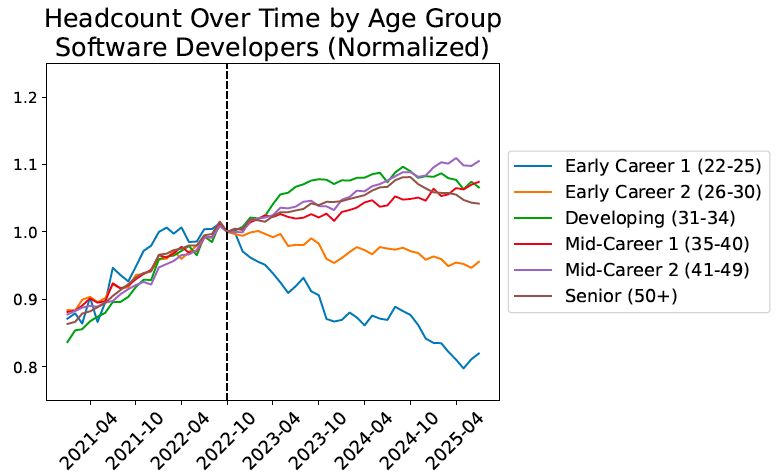
Even if the hype cools off (this would probably be a good thing net-net), and even if there is a market correction in AI startups and valuations, I think there’s little doubt that the toothpaste is out of the tube here. If AI can perform tasks as good as, if not better than human counterparts, companies all around the world are going to implement it. Frankly, even if it’s a little worse, yet cheaper, I think a lot of companies will go for it.
We all like to say that, “taste, judgement and experience” will be the differentiators in an AI-first world, but as many rightly point out, how are you meant to gain experience, if entry-level jobs are harder to get? Ultimately, most careers start at tasks, before one develops beyond tasks, and can start to work on systems and strategy. I do think this is a dilemma, albeit I’m optimistic (some would say naive), for reasons outlined in this post.
I guess, if roles and jobs focused solely around task completion are in a risk zone, the only thing anyone can do is, try to move further up the stack.
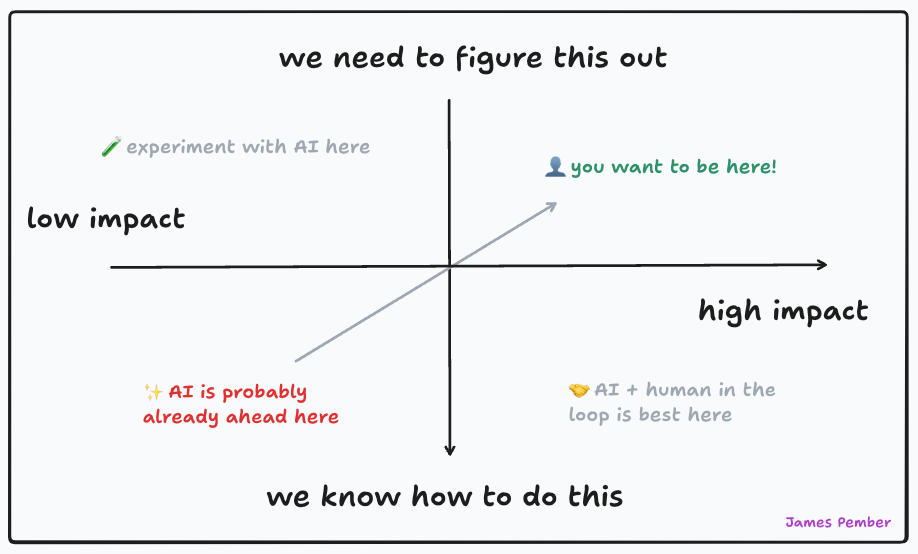
From bottom-left (or wherever you/we/they are today) to top-right. Higher-impact, higher-novelty work. Things that need figuring out. Things that aren’t at all clear yet. Things that haven’t been done, or solved before.